
Reflecting subdued global economic growth, India's outward foreign direct investment (FDI) fell by 33.3 per cent sequentially to $1.21 billion in August, compared to over $1.82 billion in July.

Net foreign direct investment (FDI) in India, inflows minus outflows, declined sharply in April-August this year to $2.99 billion from $18.03 billion in the same period last year on moderation in global activities and a rise in repatriation. The Reserve Bank of India's data (October 2023 bulletin) said FDI in India was $7.28 billion and FDI by India, that is money invested abroad from the country, was $4.28 billion in April-August 2023. As for 2022, FDI in India was $22.79 billion and FDI by India was $4.76 billion in April-August.
Interrupting a two-month streak of decline, outward foreign direct investment (FDI) rose sequentially to $1.85 billion in July over $1.07 billion in June, an increase of 73 per cent. However, it was lower than the $2.18 billion in July last year, according to the Reserve Bank of India data. Outbound FDI, expressed as financial commitment, has three components - equity, loans, and guarantees.

The sectors that received most of the investment during this period included manufacturing, financial services, business services, computer services, electricity, and other energy sectors.

Brendan Lynch, the assistant US trade representative for South and Central Asia, will pay a five-day visit to India beginning Tuesday, days before US President Donald Trump's tit-for-tat tariff kicks in. The senior US trade official is expected to hold talks with Commerce Minister Piyush Goyal besides meeting a number of senior Indian officials.
The annual decline works out to be 16.3 per cent in 2022-23 compared to inflows in 2021-22. The gross FDI inflows in 2021-22 were $81.97 billion, up 10 per cent over fiscal 2019-20. The previous year-on-year contraction in FDI was in 2012-13 when the inflows declined by 26 per cent to $34.298 billion.
India's outward Foreign Direct Investment (FDI) nosedived to $11.12 billion in January-June (H1 2023) from $23.57 billion in the same period last year, indicative of the slowdown in the global economy, according to the Reserve Bank of India (RBI) data. The outward FDI expressed as the total financial commitment, has three components, namely equity, loan and guarantees. The sharp contraction in the commitments (outward FDI) was prominent in the April-June 2023 period.
Total foreign direct investment (FDI) inflow to India declined to $74.01 billion in the calendar year 2021, which is 15 per cent lower from $87.55 billion recorded in the previous year, the ministry of commerce & industry said on Wednesday. The FDI inflow includes equity inflow, equity capital of unincorporated bodies, re-invested earnings and other capital. "FDI is largely a matter of commercial business decisions and FDI inflow depends on a host of factors such as availability of natural resource, market size, infrastructure, political and general investment climate as well as macro-economic stability and investment decision of foreign investors.

Foreign direct investment into India increased by 60 per cent to $4.44 billion in April as against $2.77 billion in the same month last year, government data showed on Wednesday. Total FDI, including equity, re-invested earnings and capital, rose 38 per cent to $6.24 billion in April this year, as against $4.53 billion in April 2020, as per the data. "During April, 2021 FDI equity inflows amounting to $4.44 billion were reported in the country which is an increase of 60 per cent over the FDI equity inflow of April, 2020 ($2.77 billion)," the commerce and industry ministry said in a statement.

The Insurance Regulatory and Development Authority of India (Irdai) has asked at least 10 general and life insurance companies to submit a detailed road map for their listing strategies by the end of this month, according to multiple sources with direct knowledge of the matter. "The regulator met four life and six general insurers last month and asked them to provide their listing strategies by the end of February," said one of the sources.
Total foreign direct investment into India rose 2 per cent to the "highest ever" $83.57 billion in 2021-22 on account of various measures like policy reforms and ease of doing business taken by the government, the commerce and industry ministry said on Friday. Total FDI comprises equity inflows, reinvested earnings and other capital. In 2020-21, the inflow stood at $81.97 billion. It was $74.39 billion in 2019-20 and $62 billion in 2018-19. "India has recorded the highest ever annual FDI inflow of $83.57 billion in 2021-22," the ministry noted in a statement.

India is not "rethinking" supporting investments from China, said Commerce and Industry Minister Piyush Goyal on Tuesday, referring to a proposal made in the Economic Survey 2024. The survey by India's chief economic advisor last week said India had two "choices" to benefit from the so-called China plus one strategy, either by integrating into that country's supply chain or by promoting foreign direct investment (FDI). "Chief economic advisor's report speaks about new ideas and gives out their own thinking. It is not at all binding on the government and there is no rethinking to support Chinese investments in the country," Goyal told reporters in Delhi.

High frequency indicators, like vehicles sales, air traffic, steel consumption and GST E-way bills, point towards a sequential pickup in momentum of economic activity during the second half of the fiscal 2024-25 and sustain moving forward, RBI Bulletin said on Wednesday. However, a strong dollar, driven by US economic resilience and trade policy pivots, could exacerbate capital outflows from emerging economies, push risk premiums higher, and intensify external vulnerabilities, said an article on 'State of the Economy' published in RBI's February bulletin.

Foreign direct investments (FDI) into the country grew 19 per cent to $59.64 billion during 2020-21 on account of measures taken by the government on the fronts of policy reforms, investment facilitation and ease of doing business, the commerce and industry ministry said on Monday. Total FDI, including equity, re-invested earnings and capital, rose 10 per cent to the "highest ever" of $81.72 billion during 2020-21 as against $74.39 billion in 2019-20. "FDI equity inflow grew by 19 per cent in 2020-21 ($59.64 billion), compared to 2019-20 ($49.98 billion)," the ministry said in a statement. In terms of top investor countries, Singapore is at the top with 29 per cent share.

India and the United States will finalize the contours, schedule of negotiations, and terms of reference for a proposed bilateral trade agreement (BTA) during a three-day meeting beginning Tuesday. The agreement is expected to be finalized in two tranches, with the first phase focusing on goods trade. The US team, led by Assistant US Trade Representative for South and Central Asia Brendan Lynch, will be in India from March 25-29 to discuss the agreement. Both countries are aiming to conclude the first phase of the agreement by fall 2025.

From the 30-share blue-chip pack, Zomato surged over 7 per cent. Maruti, ITC Hotels, ITC, Mahindra & Mahindra, Asian Paints, Titan and IndusInd Bank were among the biggest gainers. Power Grid, Larsen & Toubro, NTPC, UltraTech Cement, HCL Tech, Tech Mahindra, Infosys and Adani Ports were among the laggards.

With India overtaking China in terms of weightage in the Morgan Stanley emerging markets IMI, Indian equities could see inflows of about $4.5 billion (Rs 37,000 crore), according to estimates. This week, Morgan Stanley announced that India has overtaken China in the MSCI Emerging Markets Investable Market Index (MSCI EM IMI). The weight of India in MSCI EM IMI stood at 22.27 per cent compared to 21.58 per cent of China.

Ask rediffGURU and PF expert Milind Vadjikar your insurance, stocks, mutual fund and personal finance-related questions.

'Expect India to keep doing well irrespective of geopolitics.'

The outward foreign direct investment (FDI) by Indian companies stabilised in 2023-24 (FY24) after witnessing a fall in 2022-23 (FY23). The actual outward FDI inched up slightly to $13.75 billion in FY24 from $13.49 billion in the previous financial year (FY23), according to finance ministry data. This stability came after a sharp fall in outward flows in FY23 from $18.52 billion in 2021-22 (FY22).
'An explanation perhaps lies in the culture of revisions that has grown deep roots in the government data collection system,' notes A K Bhattacharya.

However, that could only be for sectors where 100 per cent FDI is allowed under the automatic route and pose no risk to national security.
A series of steps taken by the government to promote ease of doing business and liberalisation of foreign direct investment norms have helped India receive record FDI inflows so far this year, and implementation of measures like PM Gati Shakti, single window clearance and GIS-mapped land bank are expected to further push investments in 2022. Notwithstanding the global slowdown and the COVID-19 pandemic, total foreign direct investments into India rose to a record $81.72 billion in 2020-21. During April-July this fiscal, FDI (foreign direct investment) into the country increased by 62 per cent to $27.37 billion.

The Union Finance Ministry on Friday announced key amendments to foreign exchange (forex) regulations, including mandating government approvals for all investments originating from countries that share land borders with India. The latest amendments also seek to simplify cross-border share swaps and streamline key definitions, such as "control". The updated regulations have aligned the treatment of downstream investments made by overseas citizen of India (OCI)-owned entities with those owned by non-resident Indians (NRIs) on a non-repatriation basis.

Private consumption is back driven by festive spending, and the medium-term economic outlook remains bullish as the innate strength of the macro-fundamentals reasserts itself, the Reserve Bank Bulletin said on Wednesday. Global economic activity remained resilient during Q4:2024 amidst fragile confidence and rising protectionism, said an article on 'State of the Economy' published in the November Bulletin.

Whether it's Carrefour, Ford, or other foreign majors, they are ready to adjust their strategies and design their plans in a way that would address the Indian consumption story.

Foreign direct investment (FDI) in India grew 40 per cent to USD 51.47 billion during April-December 2020-21, according to government data released on Thursday.

While Paytm (One97 Communications) is not completely past regulatory hurdles, its share price has gained in the last month or two. The Paytm handle migration is complete along with FDI clearance necessary for the Payment Aggregator (PA) license. UPI consumer data indicates stable market share, and expansion in partner networks in financial distribution. All this implies Paytm could be set to meet guidance of turning Adjusted Ebitda breakeven by Q4FY25 (ex of UPI-incentives).
The US replaced Mauritius as the second largest source of foreign direct investment into India during 2020-21 with inflows of $13.82 billion, according to government data. Singapore remained the top source of foreign direct investment (FDI) into the country for the third consecutive fiscal at $17.41 billion. During the last financial year, India attracted $5.64 billion in FDI from Mauritius, according to the data by the Department for Promotion of Industry and Internal Trade (DPIIT).

Recently, the government relaxed foreign direct investment (FDI) norms for the space sector by allowing 100 per cent FDI in manufacture of components, systems or sub-systems for satellites, ground segments, and user segments. It also permitted 74 per cent FDI in satellite manufacturing and operation as well as satellite data products and 49 per cent in development of launch vehicles and spaceports. Following this, stocks of related companies saw an uptick on the bourses.

The overall FDI policy landscape is changing and can do so faster, says

The eighth Budget of Finance Minister Nirmala Sitharaman continued to focus on 'GYAN' (Garib, Youth, Annadata, Nari) to maintain a consistent and coherent strategy initiated over the years in pursuing the government's vision for Viksit Bharat. The approach, characterised by incremental yet impactful steps, aims to create a compounding effect over time.

The government on Thursday permitted 100 per cent foreign investment under the automatic route in oil and gas PSUs which have received in-principle approval for strategic divestment. The move would facilitate privatisation of India's second biggest oil refiner Bharat Petroleum Corp Ltd (BPCL). The government is privatising BPCL and selling its entire 52.98 per cent stake in the company.

While the UN report said that FDI inflows rose 6 per cent in 2018 to $ 42 billion, the government's own data for the entire FY19 period has shown that inbound equity investments declined for the first time in six years in FY19.

Trade links with Israel have strengthened in the past few years, even as the value of goods exchanged with Iran has diminished. Iran accounted for $3.9 billion worth of India's exports in the four quarters ending December 2019, compared to $3.6 billion to Israel. However, India's exports to Iran dropped to $1.2 billion as of December 2023, on a rolling four-quarter basis, while exports to Israel grew to $6.1 billion in the same period.

The retail sector seeing a sharp rise in FDI flows is one where the Modi government's policy is not clear and has got a little muddled by its political ideology.

The draft favoured up to 49 per cent foreign equity in inventory model in the case of 100 per cent made in India products sold through Indian management-controlled platforms with resident Indian founders/promoters.
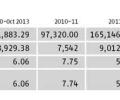
Since August 2013, FIPB has approved two FDI proposals in the telecom sector.

Mutual funds (MFs) are set to be net sellers of Indian equities for the first time in the past seven financial years, having sold stocks worth about Rs 1.27 trillion so far in 2020-21 (FY21), making it the highest net sales on record in a financial year. MFs had been net buyers in the previous six financial years, including purchases of over Rs 1.41 trillion in FY18, Rs 88,152 crore in FY19, and Rs 91,814 crore in FY20. The last time they offloaded Indian equities was in FY14, when they net sold stocks worth Rs 21,159 crore. In contrast, foreign portfolio investors (FPIs) have ramped up buying in FY21, purchasing more than Rs 2.6 trillion worth of shares.

 © 2026 Rediff.com - Advertise with us - Disclaimer - Privacy Policy - Sitemap - Feedback - About us - Terms of use - Grievances